Your Custom Text Here
After my father’s death last year, I found among his belongings a photograph of his hometown in Bolivia. Rising within it was a tall flowering tree with a rounded crown. It was a cinchona tree, my uncle explained — renowned for its bitter bark, used for centuries to calm fevers and the original source of the antimalarial drug quinine.
Having long been drawn to herbal remedies that promise relief from pain, I embarked on an inquiry into the cinchona tree’s movement from its native cloud forests, where the Andes meet the Amazon, to the rest of the world. I learned that cinchona bark, long known to Quechua healers, became a global commodity through Jesuit networks, colonial trade, botanical expeditions, and plantation economies. Its bark treated malaria, enabled imperial expansion, and reshaped human movement across all continents.
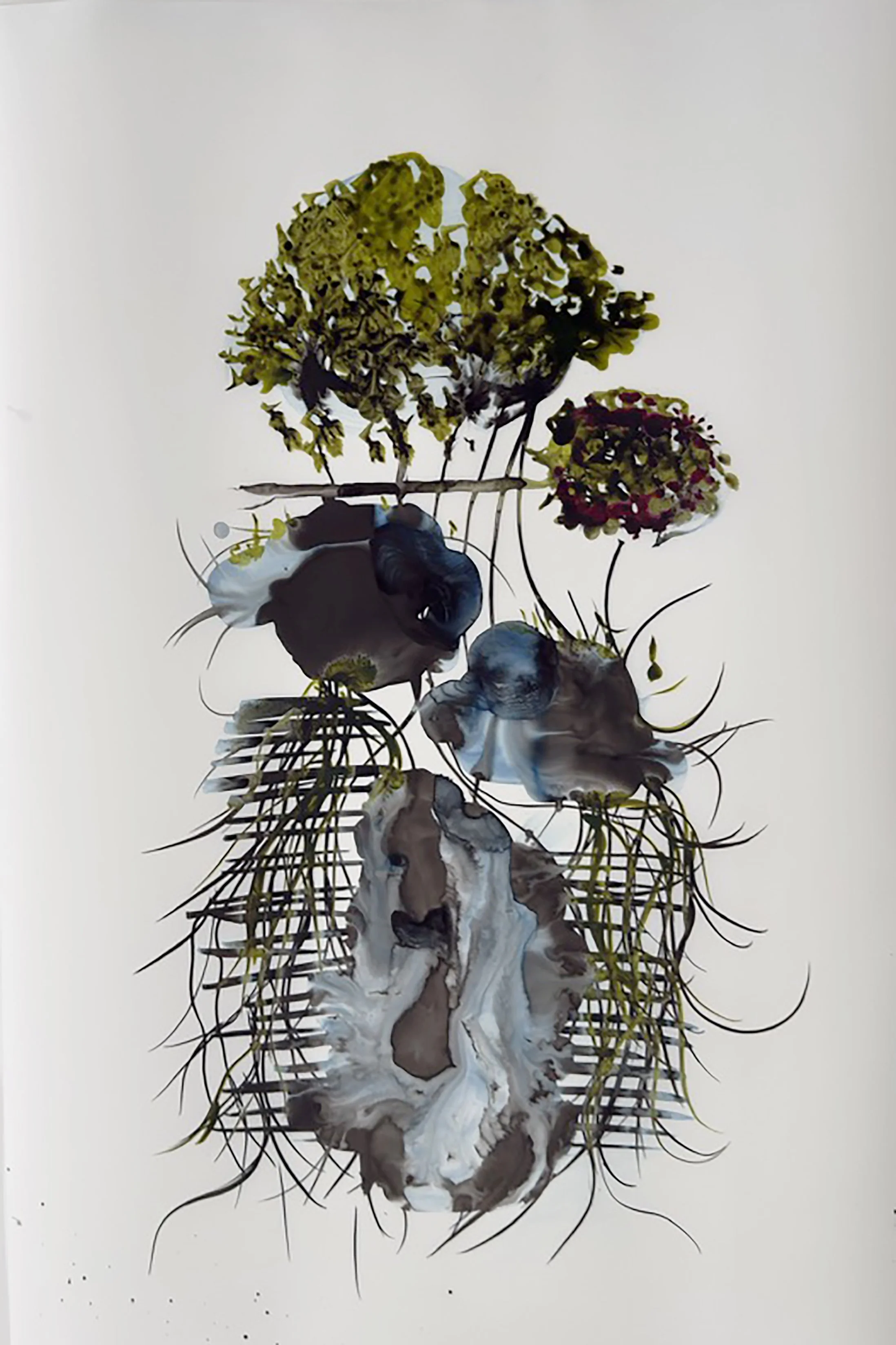
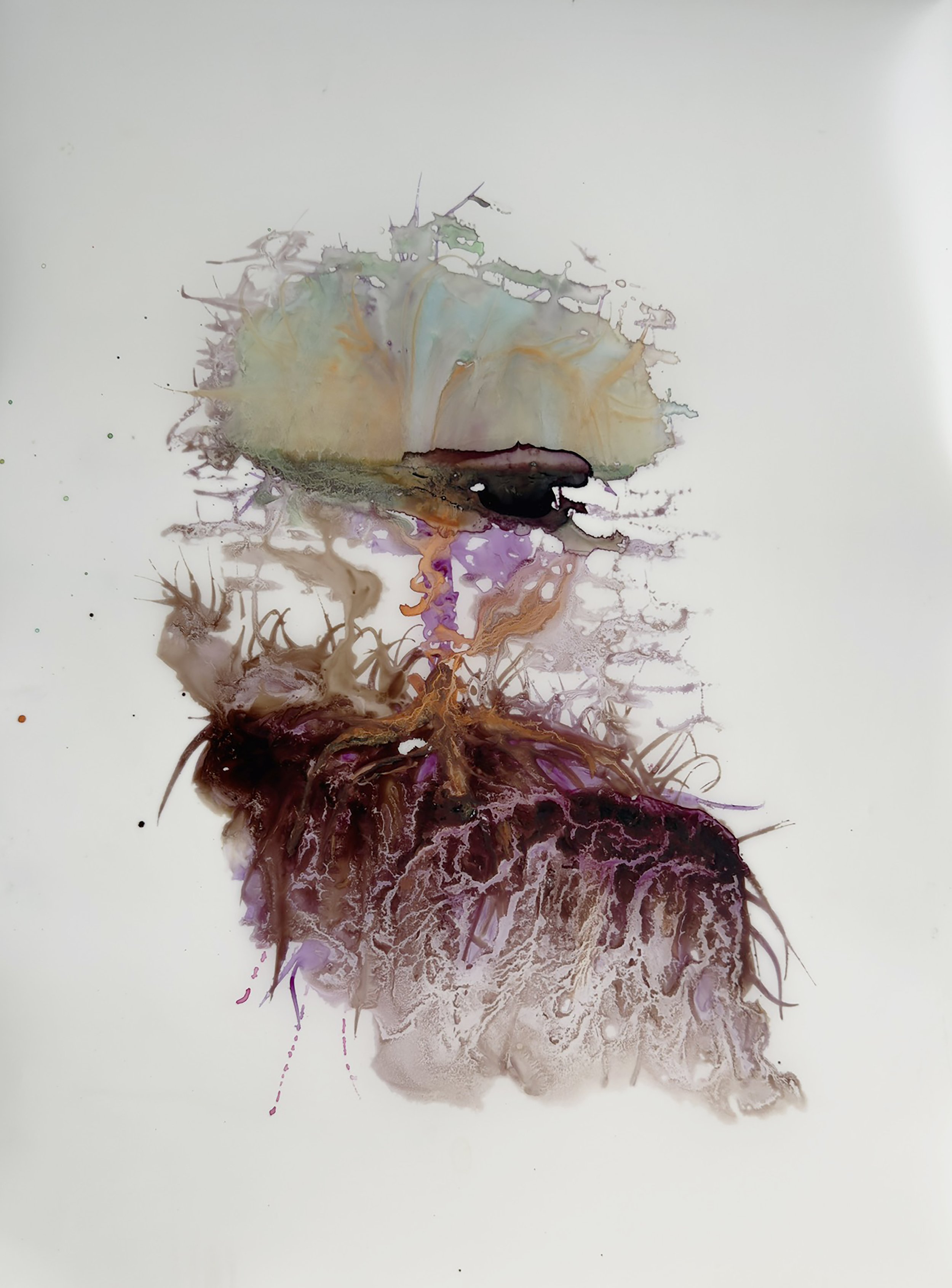
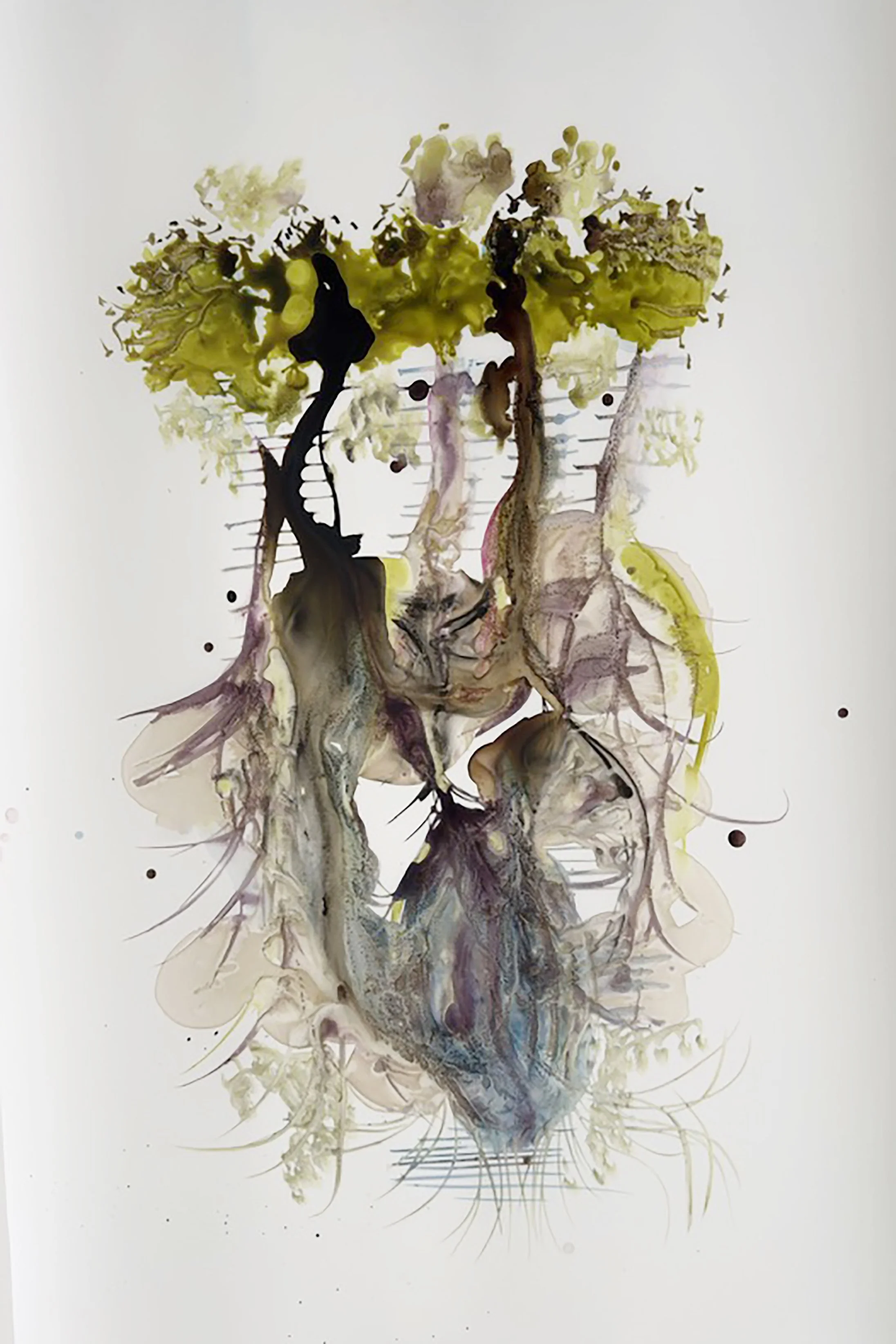
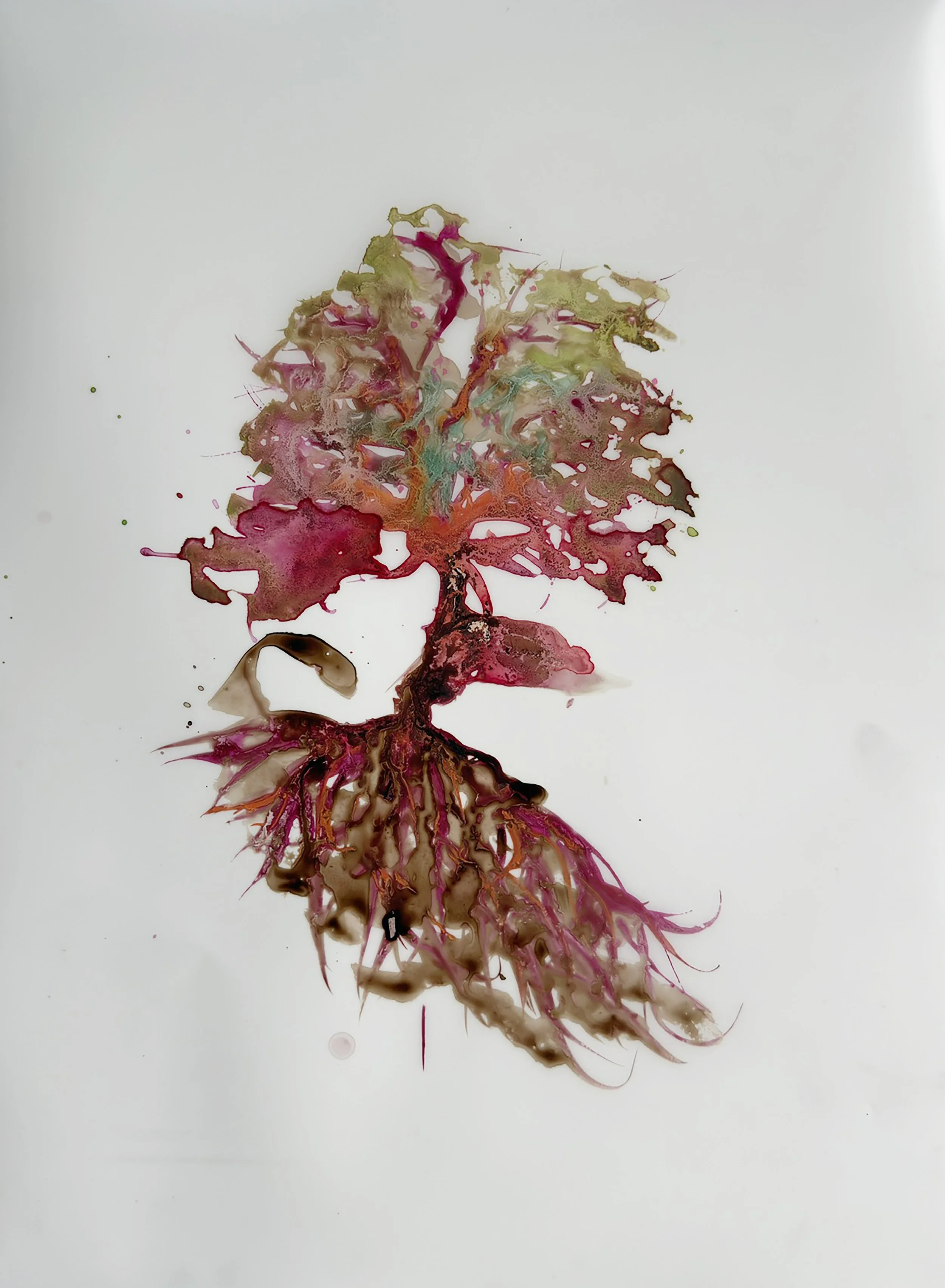
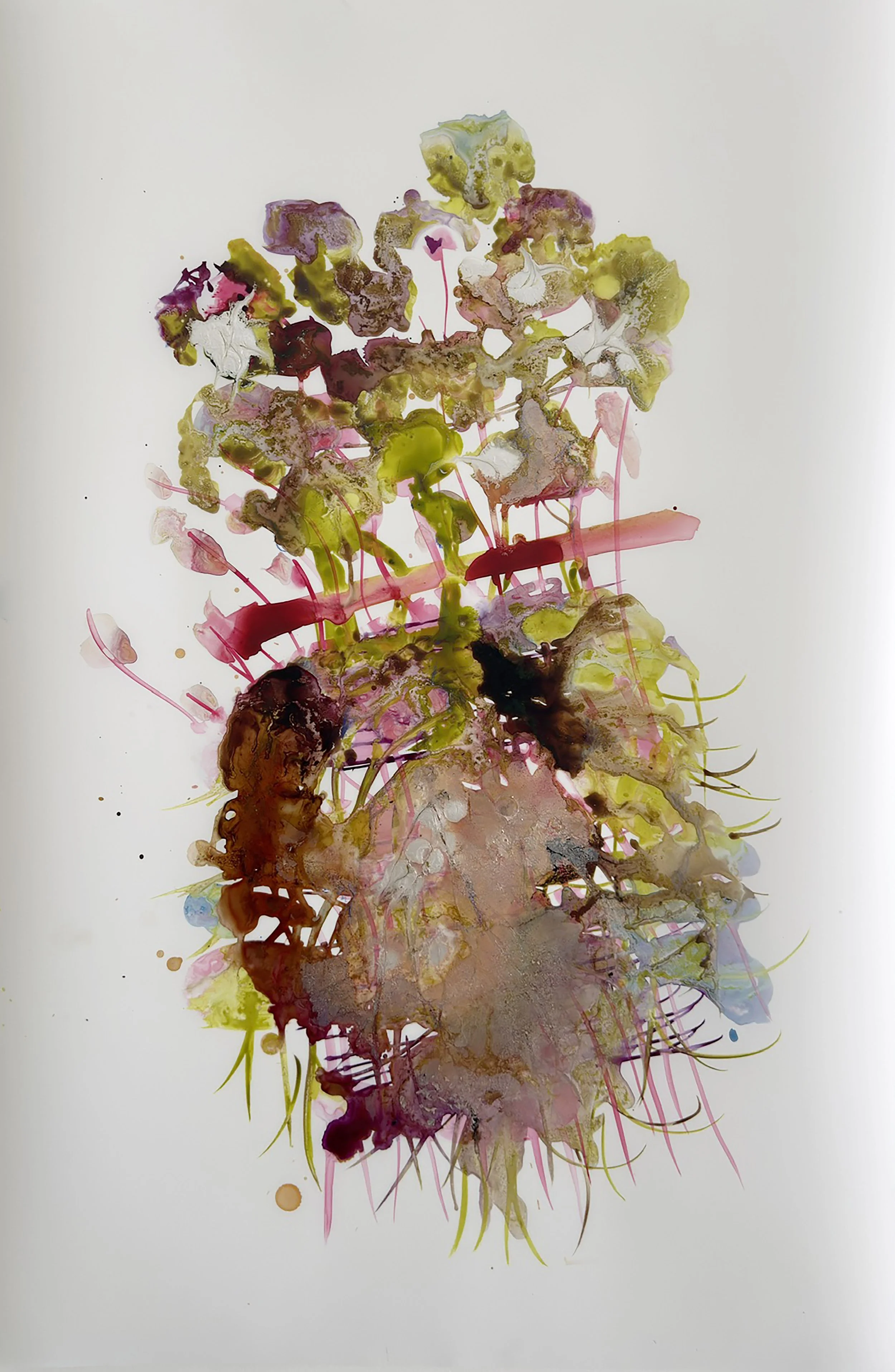
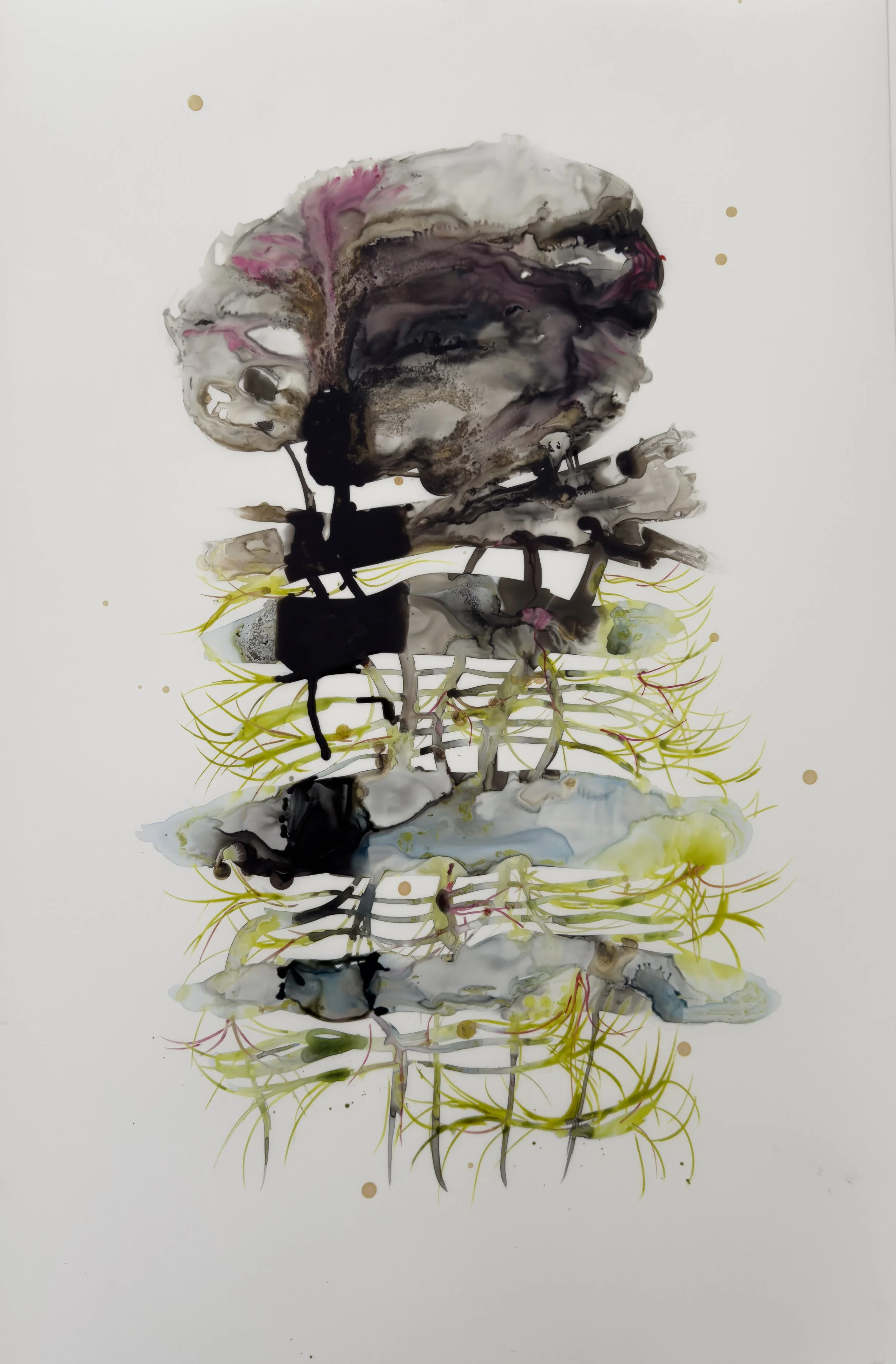
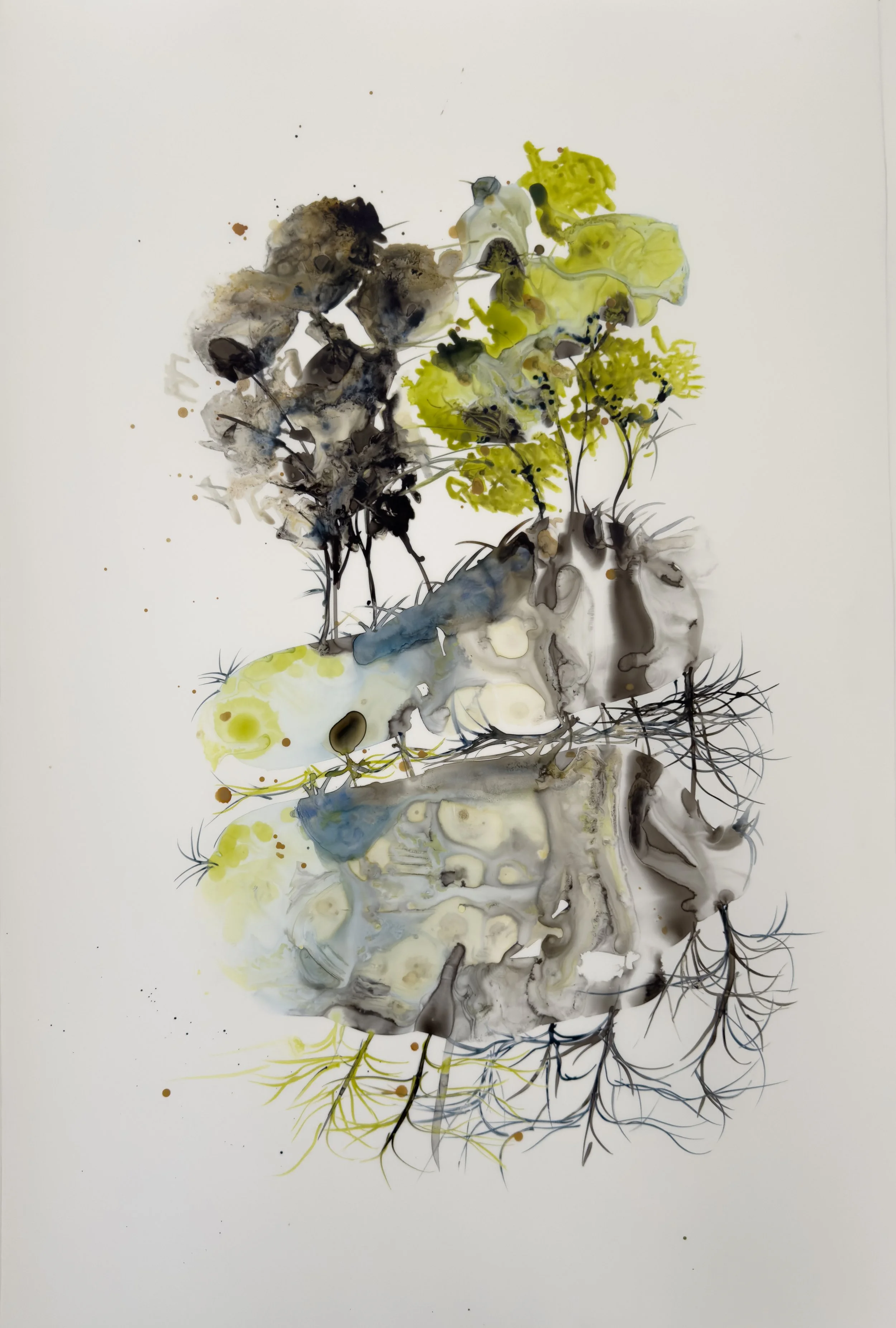
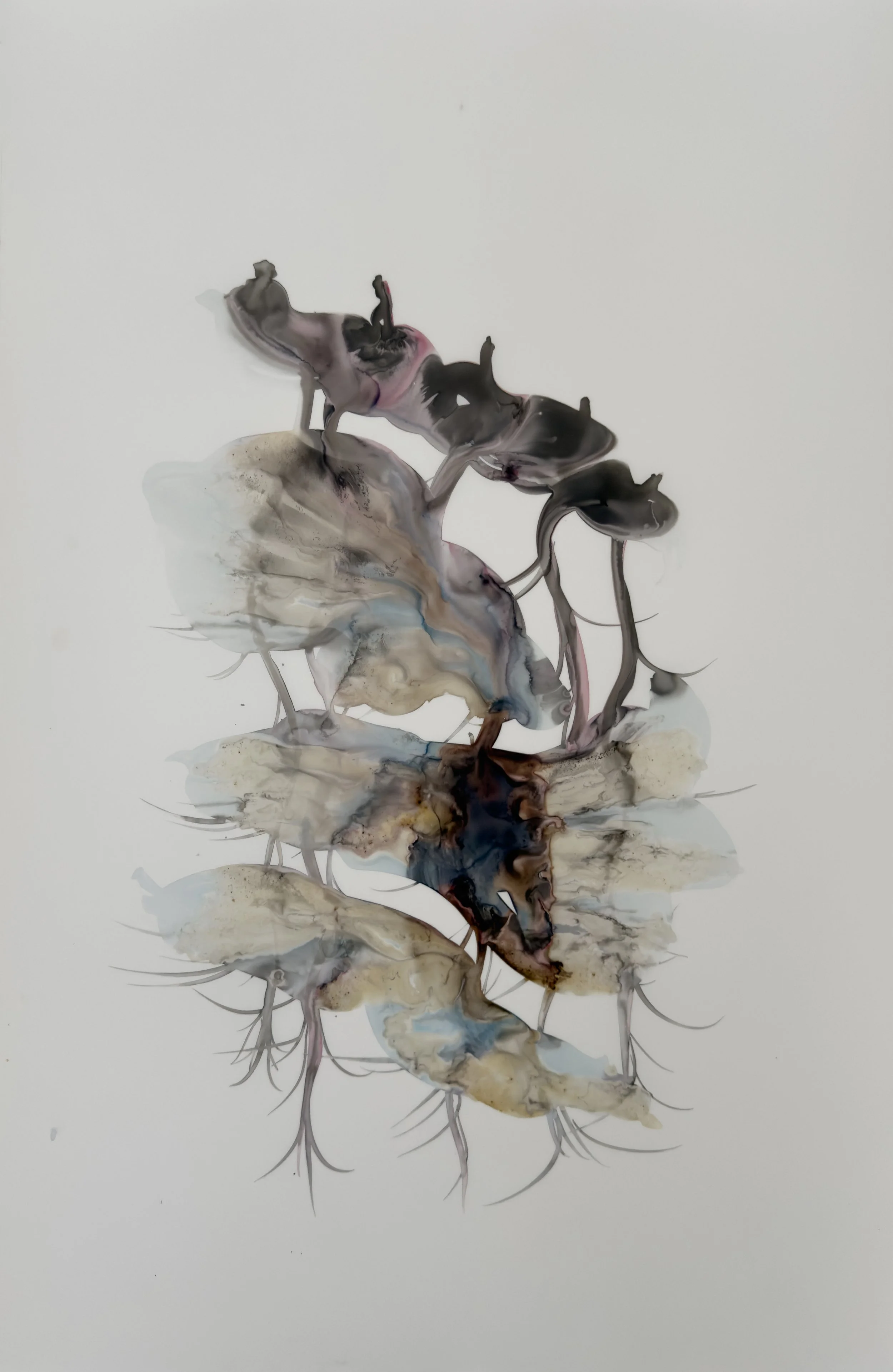
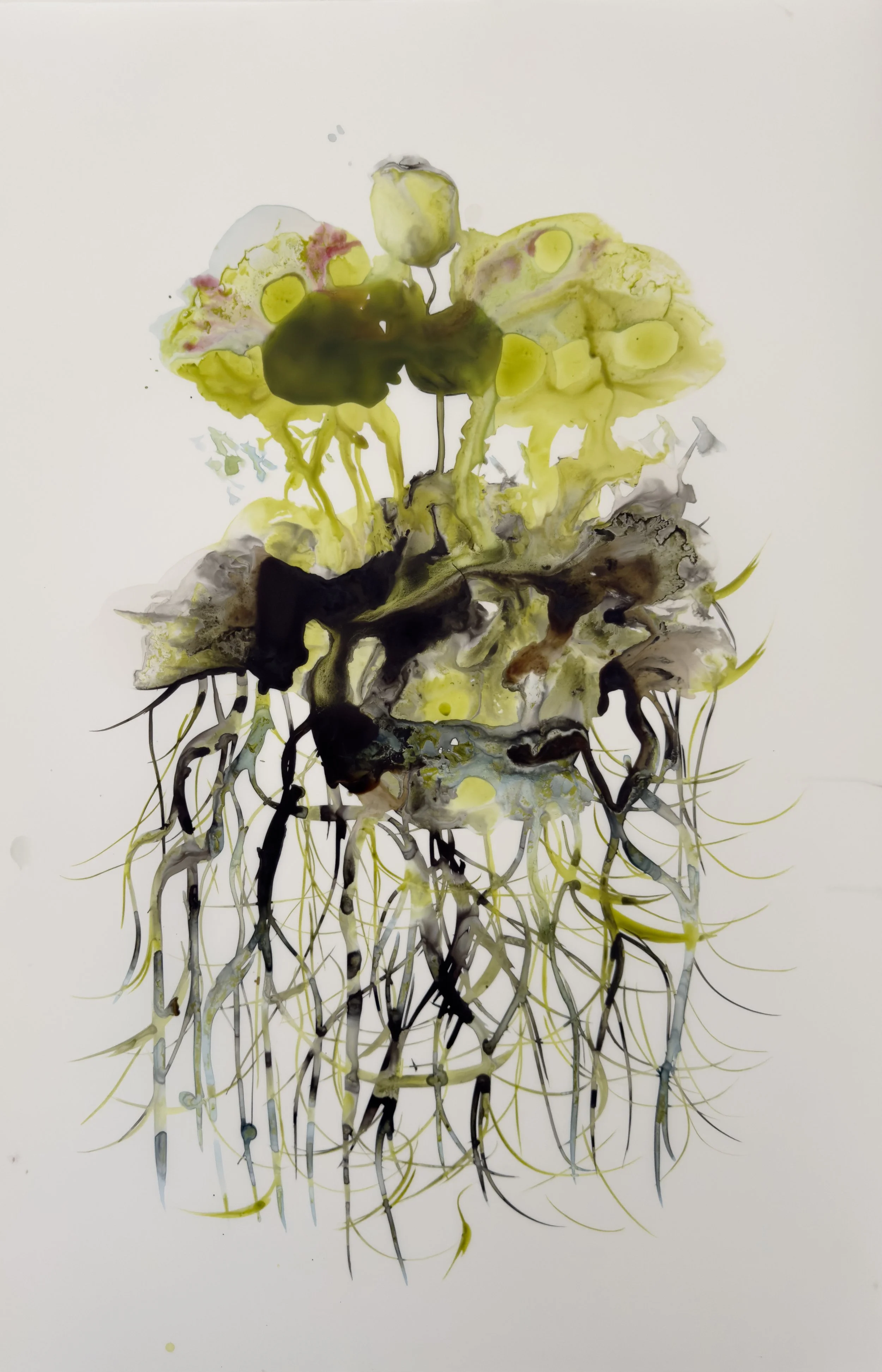
The works in this series were inspired by that family photo where a seemingly nondescript tree, almost unidentifiable among its surroundings, emerged from its layered history. I built images that spread, resisted, and sedimented over time. As I weaved watercolor, ink and cinchona bark dye on yupo paper, pigments connected and separated, bled and settled, echoing the circulation of bodies, plants, and medicines across geographies. As each painting slowly dried and accumulated its own internal weather, the cinchona tree became both subject and witness—a living archive of extraction, healing, and survival.
I imagined that the quinine tree, now almost extinct in habitat, carried across oceans in fragments of seeds and bark, might remember every fever it has eased and every life it has briefly returned to the world.
After my father’s death last year, I found among his belongings a photograph of his hometown in Bolivia. Rising within it was a tall flowering tree with a rounded crown. It was a cinchona tree, my uncle explained — renowned for its bitter bark, used for centuries to calm fevers and the original source of the antimalarial drug quinine.
Having long been drawn to herbal remedies that promise relief from pain, I embarked on an inquiry into the cinchona tree’s movement from its native cloud forests, where the Andes meet the Amazon, to the rest of the world. I learned that cinchona bark, long known to Quechua healers, became a global commodity through Jesuit networks, colonial trade, botanical expeditions, and plantation economies. Its bark treated malaria, enabled imperial expansion, and reshaped human movement across all continents.
The works in this series were inspired by that family photo where a seemingly nondescript tree, almost unidentifiable among its surroundings, emerged from its layered history. I built images that spread, resisted, and sedimented over time. As I weaved watercolor, ink and cinchona bark dye on yupo paper, pigments connected and separated, bled and settled, echoing the circulation of bodies, plants, and medicines across geographies. As each painting slowly dried and accumulated its own internal weather, the cinchona tree became both subject and witness—a living archive of extraction, healing, and survival.
I imagined that the quinine tree, now almost extinct in habitat, carried across oceans in fragments of seeds and bark, might remember every fever it has eased and every life it has briefly returned to the world.
Protective Sheath (2026)
Sumi ink, cinchona bark dye, watercolor on yupo paper, 30 × 20 inches
Jesuit's Bark
Watercolor, walnut ink on yupo paper, 20 × 15 inches
Robustas (2026)
Sumi ink, watercolor on yupo paper, 30 × 20 inches
Fever Tree (2026)
Walnut ink and watercolor on yupo paper, 20 × 15 inches
Royal Efforts (2026)
Sumi ink, watercolor ink, cinchona bark and watercolor on yupo paper, 30 × 26 inches
Blue Mass (2026)
Sumi and walnut ink, cinchona dye, watercolor on yupo paper, 30 × 20 inches
Encounter (2026)
Sumi ink, cinchona dye, watercolor on yupo paper, 30 × 20 inches
Heme (2026)
Sumi ink, cinchona dye, and watercolor on yupo paper, 30 × 20 inches
Seedlings (2026)
Sumi ink, cinchona dye, and watercolor on yupo paper, 30 × 20 inches
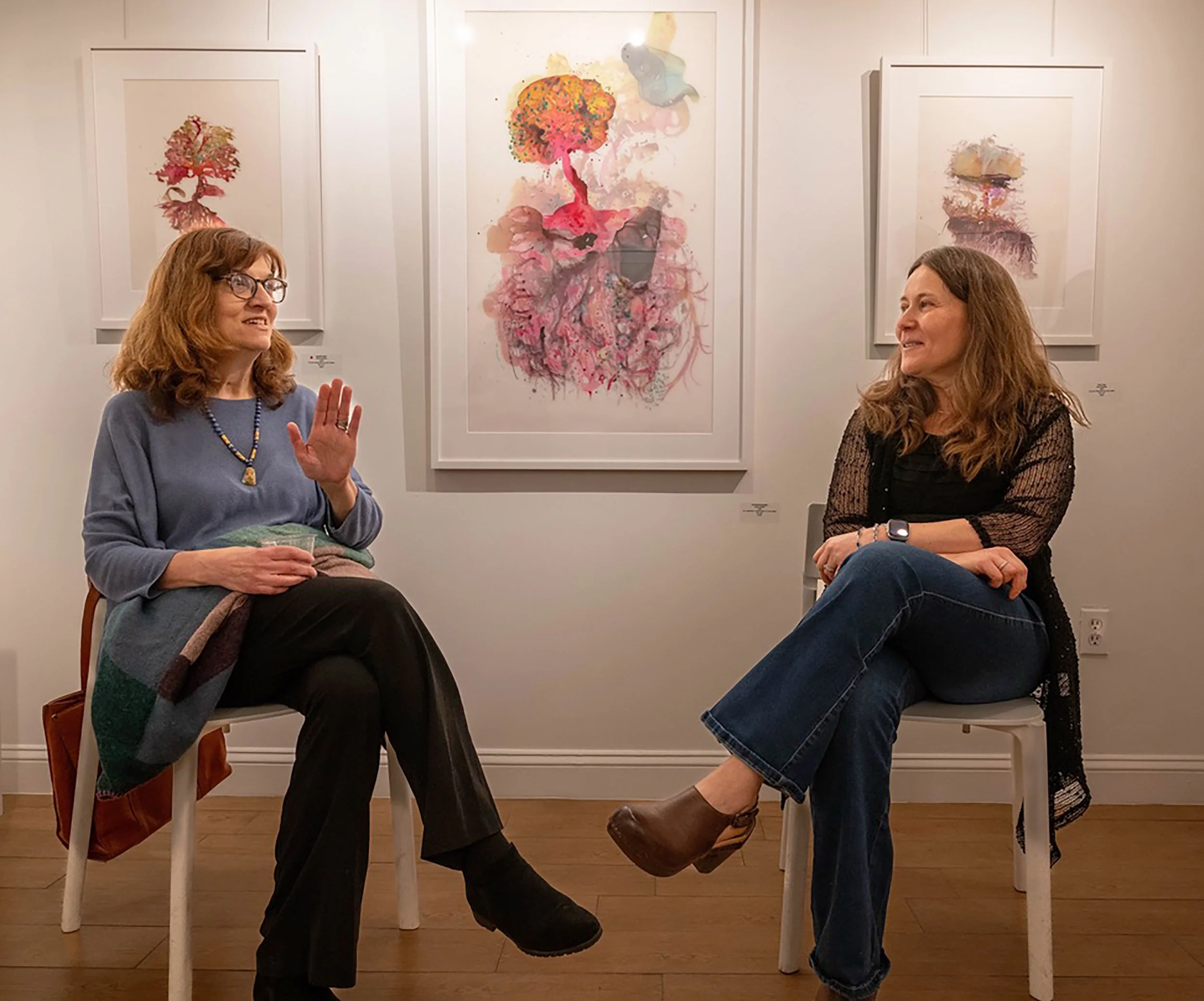
Artist Talk: Conversation between visual artist Irene Pantelis and curator Aneta Georgievska-Shine, "Bitter Bark," Studio Gallery, Washington D.C., February 28, 2026
“Statements of Nature,” Mark Jenkins, DisCerning Eye on Substack, March 18, 2026 (review of Irene Pantelis’ “Bitter Bark” exhibit at Studio Gallery by Washington Post’s erstwhile art critic)
2016-2026 © Irene N. Pantelis